

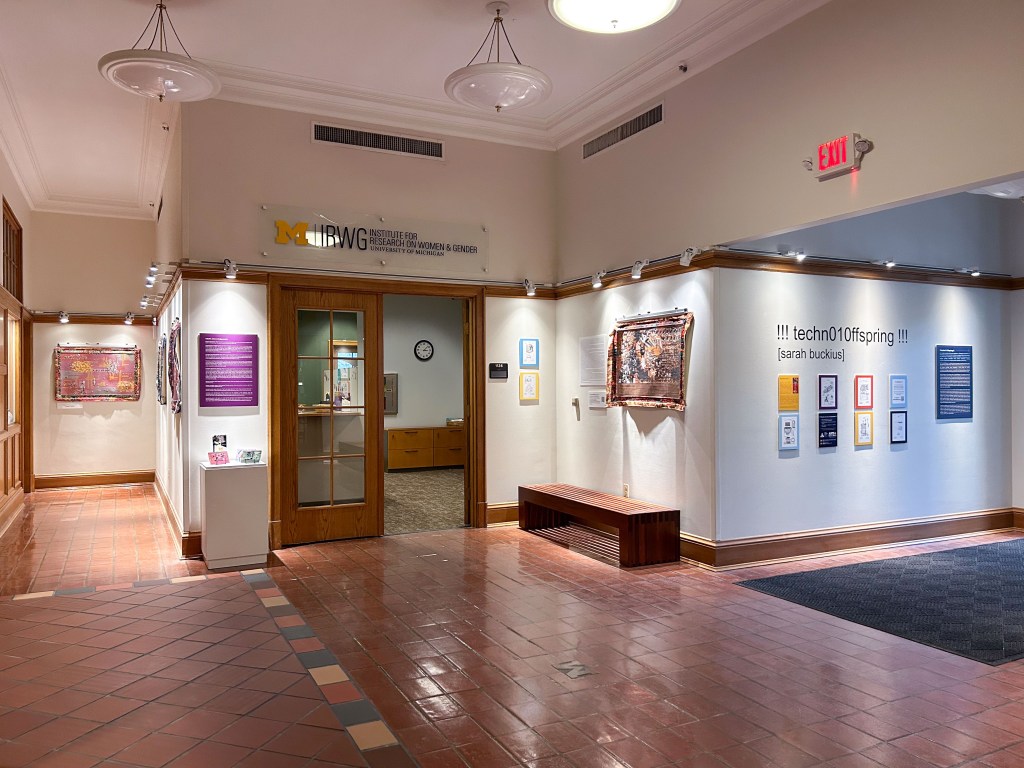


!!! techn010ffspring !!! are complex machines that weave together an “Entangled Constellation of Connections” between the labor of women, both as caregivers and as the inventors of a wide array of technology, including step-ladders, ironing boards, hair brushes, syringes, typewriters, beds, pockets, clotheslines, washing machines, dough mixers, adding machines, pessaries, to name a few.
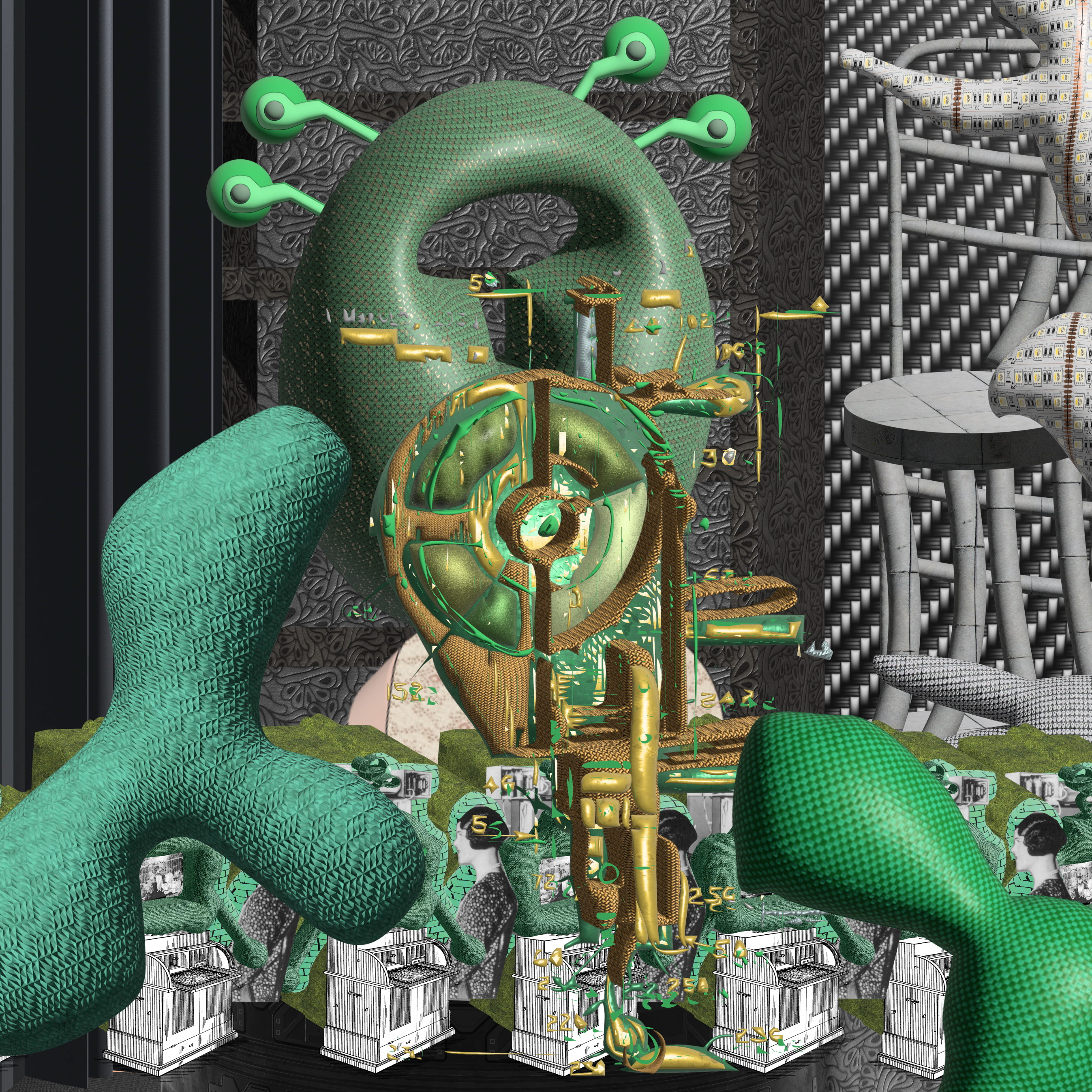
The !!! techn010ffspring !!! are digital-machine-assemblages, contraptions built from historic and contemporary building blocks— found and generated imagery related to women and technology. Found imagery includes patents by women, old picture books of women working with domestic technology, historic photographs of women working with industrial, manufacturing, textile, and communication technologies, AI generated imagery, and images of contemporary technology referenced in media articles. From these found elements, 3D-CAD (computer-aided-design) style components are developed with textile-like fabric coverings.
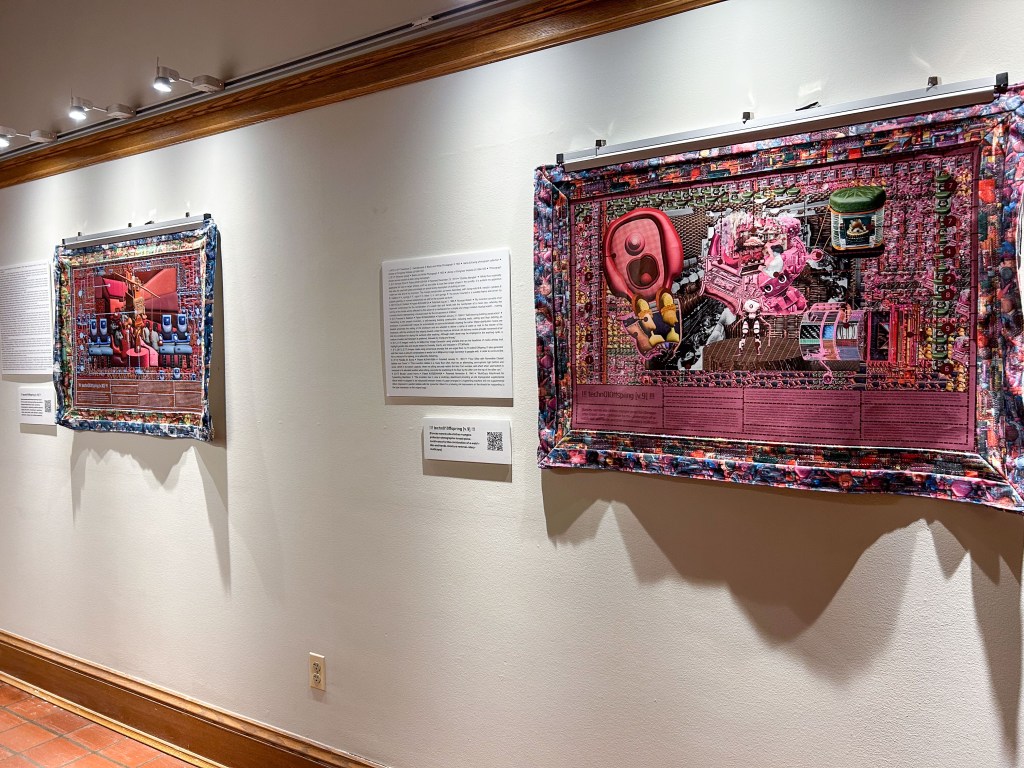
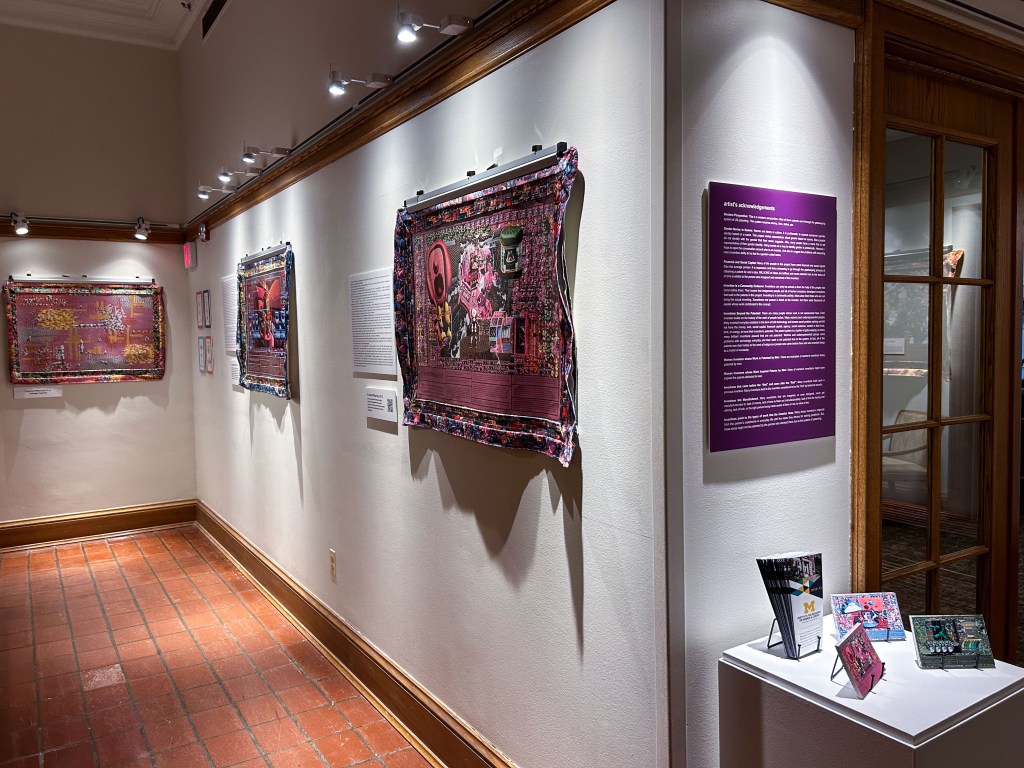
Initially designed as 3D machines, these !!! techn010ffspring !!! are animated to show their movement. Drawing upon Sarah Buckius’ training in mechanical engineering, she then creates “tapestry-engineering drawings” with annotations and details that are layered over textile-like patterns. Originally-designed velvet fabrics made from disassembled and collaged elements of patents by women frame the digitally printed canvases. These tapestry-engineering drawings, connect the monumental technologies of both textiles and the computer, calling attention to the fact that textile technologies laid the foundation for contemporary computing technologies. Weaving together the two technologies in the work references Buckius’ work with 3D-CAD design as an engineer, digital media and sewing as an artist, and caregiving work as a mother that involves countless textiles.
All of the references hold personal and political meanings for Buckius. As the mother of three small children, two of whom were five-weeks premature and in the NICU for nine weeks, and as a recent survivor of breast and uterine cancer, Buckius has experienced intense caregiving for others and medical care for herself. These emotionally and physically laborious experiences interface with a variety of technologies. Brushing the hair of premature babies’ scalps (hair brushes), washing blankets and sheets after twins’ constant vomiting (sheet and blanket textiles, washing machines), special bottles and nipples to feed babies with feeding issues (baby bottles and nipples), undergoing robotic-assisted laparoscopic full hysterectomy (da Vinci™ Surgical Robotic System), stitches for lumpectomy (medical sutures), beds (baby cribs and places of healing for herself), to name a few.
Trained as an engineer and an artist, Buckius’ machines are intentionally complex, layered, and illogical or absurdly logical. In the nature of women’s caregiving, they teeter between order and chaos. Her “digital tinkerings” tell epic tales of motherhood, technology, female bodies, and commerce—both personal and externalized through women’s inventions and early forays that bridged caregiving and commerce. Buckius’ work proposes improvisation as a form of absurdist resistance to, and alternative to, patriarchal, capitalist, production-based, and seemingly rational, useful, logical systems.
 !!! techn010ffspring !!!
Leave a comment